
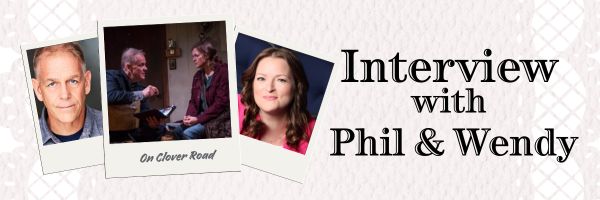
We asked award-winning ensemble members PHILIP EARL JOHNSON (Doc) and GWENDOLYN (WENDY) WHITESIDE (Lola) a few questions. Read the interview below:
How did you prepare physically, emotionally, and/or mentally for your role?
PHIL: The main aspect that I felt like I needed to address with Doc is the duality of his nature. On the surface he is, in generic terms, a good guy. He is a guy with an amiable smile who has a minute to talk with anyone he happens to meet; a midwestern gentleman with charm, but also with a selfish confidence. Underneath all of that is an emotional landscape littered with a lifetime of unfulfilled dreams and sadness. The preparation to tell this man’s, and the play’s story has been one of figuring out how to keep a lid on the turmoil he lives with while letting the audience see that it is there. Then later when they definitely see it, to allow myself to travel in the truly barren terrain, the raw emotional desperation that pours out of him, the residue of the battle he is fighting against the potent and ugly demons that haunt him. In order to do that, I have to be ready to be exposed both mentally and emotionally.
WENDY: First, I’m thrilled to be back onstage! My other “role” at American Blues is the Executive Artistic Director. Once we programmed Sheba in the Studio, we knew the space’s intimacy would ignite the powder keg of women’s oppression and repression, while serving as a cage. Physically, it’s always been my practice to take on a character’s rhythms, shape, gait, and posture. Building a character’s physicality is my favorite part of the creative process. The role of “Lola” isn’t as active as I am, so for the last year I adopted a sedentary life style. I stopped walking ~15 miles a week, ate huge portions, and increased my body weight by 25%. I leaned so much into self-neglect that my family voiced their concern, and I had to share what I was doing. The extra weight definitely impacted my energy and joints. I also missed the endorphins that helped with regulation. Emotionally and mentally, it’s important to show Lola as a fully-lived, complex person. I have a great deal of empathy for her and don’t judge her actions (or inactions) due to the misogyny she faced and her limited options of the era.
What surprises you about your role?
PHIL: That I am even doing it mostly! I haven’t done a play since before the pandemic. I turned down all opportunities for doing a play (the two I was willing or able to do didn’t happen for me) since 2019. I have been focusing on my other performances and shows full time since then. I am also surprised by how much Doc doesn’t say, things he could say but doesn’t, the tolerance he has, and tries to maintain, for the others in his home. He is a pretty straight arrow with a fairly clear picture of how he believes people are supposed to behave. This helps him stay calm. His cultural status quo is being challenged in the play but he tries to accept, against his beliefs, what’s going on which stirs up some strong emotional reactions. He could say a whole lot more but he chooses not to and that doesn’t really work for him.
WENDY: I’m surprised by her strength and ability to use charm to deescalate. I was aware of her underlying depression, but I hadn’t considered how much masking she does. Her lightness isn’t a lack of intelligence; it’s an attempt to recalibrate the room. It’s easy to dismiss Lola, but she is a formidable woman who is a survivor.
Phil and Wendy are reteaming since they last appeared in the Joseph Jefferson Award nominated production On Clover Road. What draws you to collaborate together?
PHIL: I believe the driving force is trust and encouragement. We both have a strong commitment to telling the unvarnished version of people involved in conflict and don’t have to apologize for that. For me, there is a sense that, in this country, there is a strong need to find likability. And it makes sense, in a way. Audiences are more attuned to likable characters. I think I’m more interested in characters that are trying to live in a place of love but fall into fear and make unlikable choices. Those characters challenge the empathy of the audience. I think Wendy and I are both interested in that murkiness of human behavior, people trying, though sometimes not hard enough, and making questionable decisions. We encourage the kind of choices that create conflict while trusting that we both have the same goal. We can try things and take chances without fear.
WENDY: Phil is one of the best actors I’ve ever seen. To share scenes with him is electrifying because he is so present and honest. I’ve built my Lola around Phil’s Doc. Now, I can’t imagine doing this role with anyone else because of the years of trust we’ve built on & off-stage. We have a shorthand, and I feel completely safe to be vulnerable. Also, I love that he challenges and pushes me to go more in depth with my characters.
What are you working on next?
PHIL: I’m always working on the next stand-up comedy show I’m going to do and the book I’m working on. So, lots of writing. I would like to set aside more time to do plays, but we will see. Hopefully something creative comes up. I always seem to be busy, but I’m more open to the possibility now.
WENDY: I’m jumping back into my day job at American Blues, producing Always…Patsy Cline and working on our upcoming Season 41 programming.